
Last updated August 28, 2026
Free in-home measure and quote - PGT, CGI and CWS impact lines compared on your actual openings, style by style



 Before
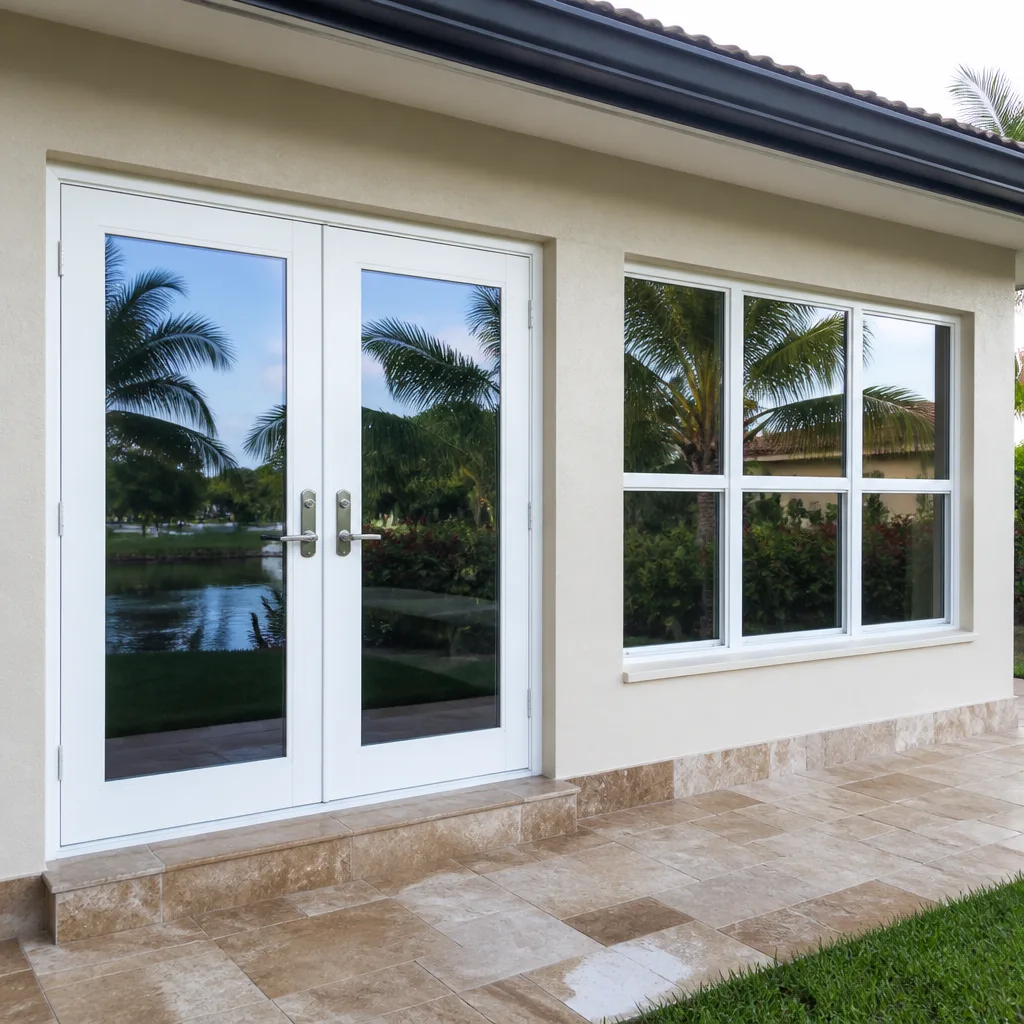 After
After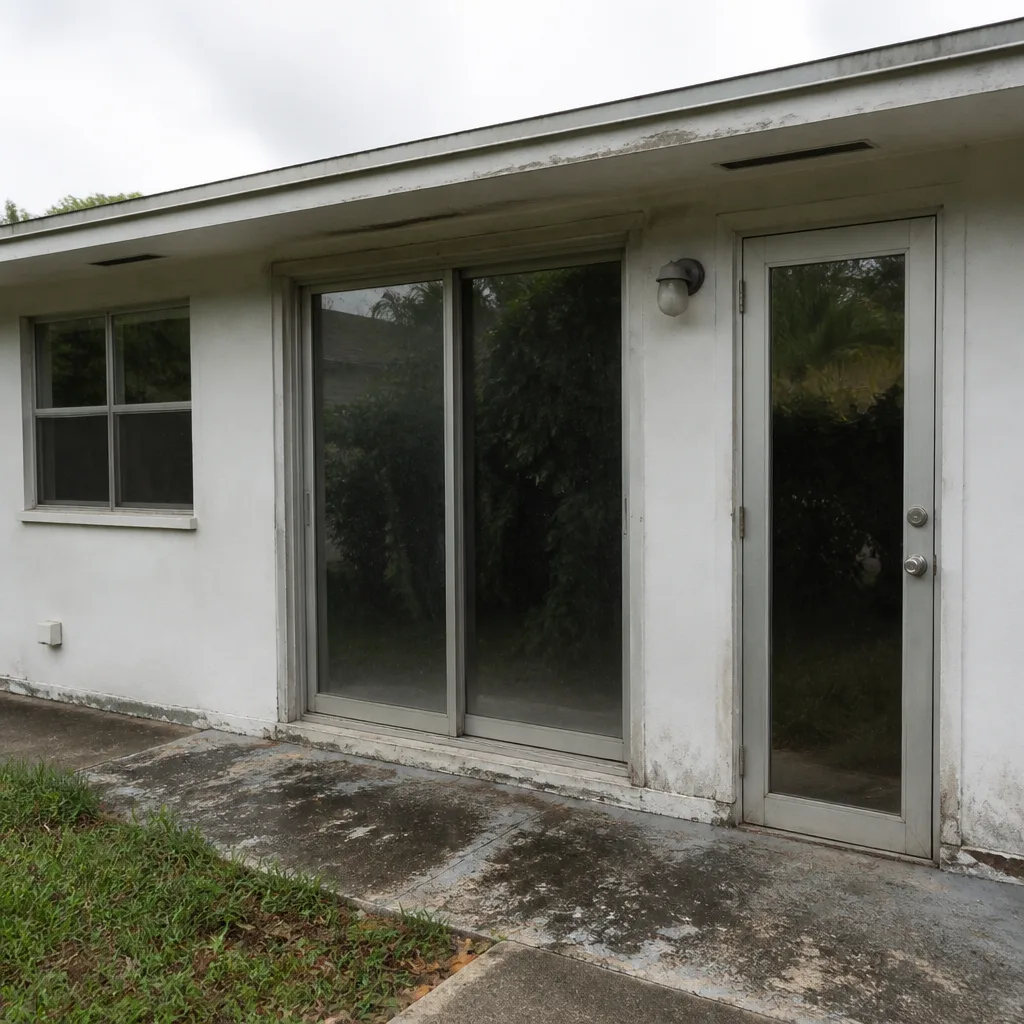 Before
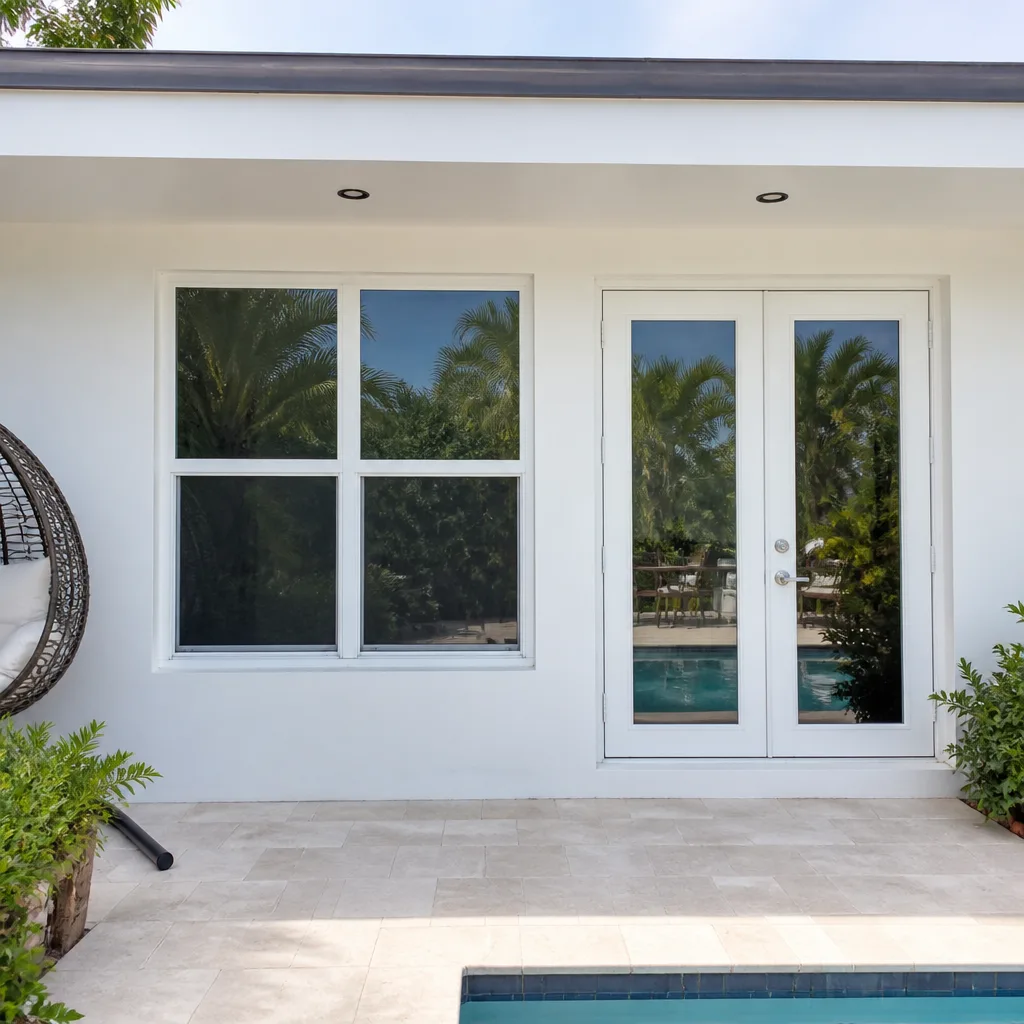 After
After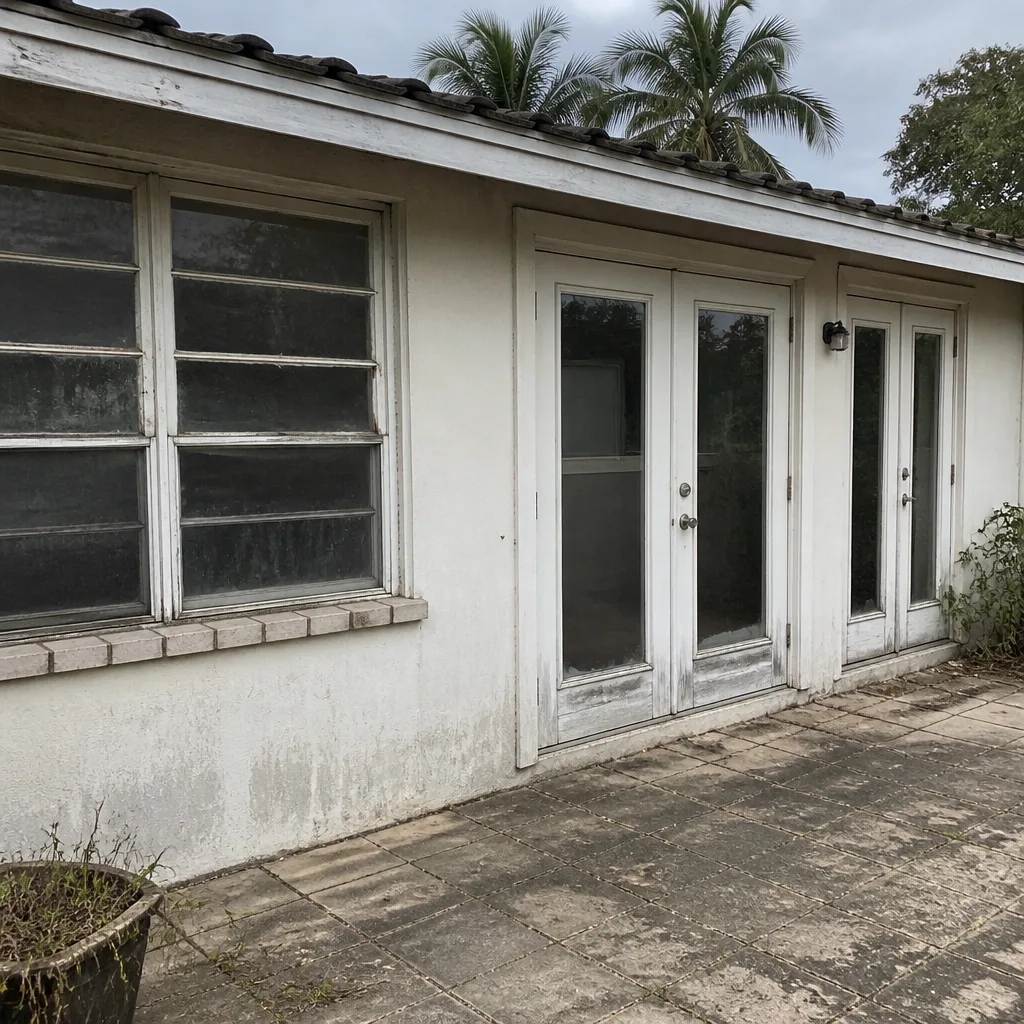 Before
 After
AfterWindows & Doors Warning Signs: A Miami Homeowner’s Reference Guide
Most window and door failures in Miami give you visible or audible warnings six to eighteen months before they become emergencies. A window that fogs between the panes is not a cleaning problem. It is a failed insulated glass unit seal, and in Miami’s humidity, that seal failure is usually accompanied by a compromised moisture barrier in the glazing pocket that you cannot see from inside the home. A door that whistles at the bottom on a calm night is not telling you to lower the AC. It is telling you the weatherstrip has collapsed or the door has shifted out of plumb. This guide, alongside our Complete Guide to Windows & Doors in Miami, assigns each symptom to its actual root cause, so the correct repair gets made the first time. You will learn to read what your windows and doors are saying, which fixes are minor, which are structural, and when to pick up the phone.
Quick Answer
The most common window and door warning signs in Miami are fogged glass (failed insulated glass unit seal), condensation forming on the interior glass surface during air conditioning season (air-sealing failure at the rough opening), a door that hums or whistles when closed (worn weatherstrip or shifted frame), and a multipoint lock that resists or catches (frame movement). A homeowner who catches these signs within the first six to twelve months will typically pay $40 to $400 for a repair. A homeowner who waits until the symptom becomes a failure faces $1,500 to $8,000 in structural repair and full unit replacement.
Table of Contents
- Fogged or Cloudy Glass: A Seal Has Already Failed
- Condensation on the Interior Glass During AC Season
- Whistling, Hissing, and Air Leaks at a Closed Door
- Cracks at the Window Corner: Settlement vs. Impact Racking
- Salt Corrosion on Aluminum Frames, Hardware, and Stucco
- Multipoint Lock Resistance and Wind-Load Failure
- Musty Odors, Wall Stains, and Hidden Moisture Pathways
- Common Mistakes to Avoid
- When to Call a Professional
- Frequently Asked Questions
Fogged or Cloudy Glass: A Seal Has Already Failed
The kind of fog we mean here does not wipe off. It sits between the two panes of an insulated glass unit, which means the desiccant inside the spacer has become saturated and the edge seal has let go. In Miami, where the outdoor dew point stays above 70 degrees for six months of the year, an insulated glass unit is under constant moisture-load pressure. A unit with a weak edge seal will not survive a decade here the way it might in a drier climate. Once the fog appears, the insulating gas has already escaped or become saturated. The glass still functions as a window. It does not function as an energy barrier.
We have replaced fogged units in homes all over Coral Gables, Kendall, Pinecrest, and North Miami. The pattern is usually the same: the homeowner noticed a haze two rainy seasons ago, ignored it, and is now looking at a unit that no longer insulates against Miami’s afternoon heat load. The repair is straightforward in most cases. The failed insulated glass unit is removed and a new one is set into the existing frame, provided the frame itself is sound. If the frame has also absorbed moisture, the glazing pocket gets cleaned and resealed before the new unit goes in. This is exactly the point where a window replacement in Miami should be weighed against a glass-only swap. A glazier who measures properly can quote both options on paper, side by side, so you see the real numbers.
What to look for: a milky haze that never goes away, water droplets sealed between panes, or a soapy film on the interior surfaces. If the fog wipes off with a cloth, you are looking at surface condensation, not a failed unit. That distinction matters because the fixes are different and one of them costs less than the other.
Condensation on the Interior Glass During AC Season
A bead of moisture running down the interior glass in July, while the air conditioning is running hard, is not a glass problem. It is an air-sealing problem at the rough opening. Cold interior air is leaking past the window frame into the wall cavity, chilling the glass edge and the frame itself below the indoor dew point. Humid outdoor air is then pulled in through the same gap, hits the cold interior surface, and condenses. You see it on the glass. The cause lives in the gap between the window frame and the studs.
The fix, in most Miami homes, is re-sealing the rough opening from the interior and exterior sides with a proper backer rod and sealant, then re-insulating the gap. This is not a matter of running a caulk bead around the trim. The window has to be pulled or the surrounding drywall opened enough to expose the rough opening, which is why many homeowners consult our DIY vs Professional guide before starting. In some homes built before the post-Andrew code updates, the rough opening was never sealed correctly in the first place. The window was set, the trim went on, and the gap behind the trim stayed open. The condensation you are seeing now is the first visible symptom of a flaw that has been there since the house was built.
Homeowners in Coconut Grove and the older sections of Coral Gables see this constantly. The homes are beautiful, the windows are older wood or early aluminum units, and the rough openings were never treated with modern air-sealing methods. The good news is that the repair is typically less expensive than a full replacement, as long as the frame and sash are still serviceable. If the unit has to come out anyway, this is the moment to consider impact windows in Miami that carry a modern Miami-Dade NOA and a sealed opening to match.
Whistling, Hissing, and Air Leaks at a Closed Door
A closed exterior door should be quiet. When it is not, the pitch and location of the sound tell you what has failed. A soft hiss along the top edge is usually a worn or crushed head seal. A sharper whistle near the strike side, at latch height, points to a door that has pulled away from the jamb. A low hum along the bottom, near the threshold, typically means the sweep has worn down or the threshold itself has settled.
The difference in repair cost between a worn weatherstrip and a shifted door is the difference between a $40 fix and a repair that runs $400 to $2,000 depending on what moved and why. Here is how to tell them apart without guessing.
- Close the door and run a dollar bill along the seal. The bill should drag with noticeable resistance in every location. If it slides free in a particular stretch, the seal is collapsed or the door has moved away from it.
- Sight across the top edge of the door from the hinge side. The gap between the door and the jamb should be even. If it is wider at the strike side than the hinge side, the door has sagged or the jamb has shifted.
- Check the strike plate. If the latch has been scraping the plate or the deadbolt will not fully throw without lifting the handle, the frame has moved. A weatherstrip replacement will not fix that.
- Put a level on the door face and on both jambs. A door that is out of plumb while the wall is plumb is a frame-shift problem. A wall that is out of plumb while the door is plumb tells you the rough opening was never right.
In Miami, wood slab doors swell in the wet season and shrink in the dry season. That seasonal cycle will not move a properly installed jamb, but it will expose one that was underfastened. A door that drags only in August is not a door problem. It is a jamb problem, and it needs more than a plane and new weatherstrip.
Hollow metal and fiberglass doors are less affected by moisture swing, but they are affected by hinge wear. Therma-Tru fiberglass doors, which we install and service regularly, hold their geometry far better than wood in Miami’s humidity. The hinges, however, are the same steel screws into the same wood framing, and once those screws back out, the door sags the same way a wood door does. That sag is usually repairable by pulling the hinge screws and resetting them in properly sized anchors, provided the jamb itself has stayed true.
Cracks at the Window Corner: Settlement vs. Impact Racking
Two homeowners in Palmetto Bay can show you the same crack running at a 45-degree angle from the corner of a bedroom window. One crack is caused by foundation settlement. The other is caused by frame twist from a past impact event, most likely a hurricane or a tree strike. The cracks look identical in a photo. The repairs are completely different, and the wrong diagnosis leads to a repair that fails within a year.
Settlement cracking appears at multiple windows on the same elevation, typically accompanied by diagonal cracks that run in the same direction throughout the wall. The crack starts thin and widens gradually over years. The window frame usually remains square, and the sash still opens and closes without resistance. The cause is ground-level movement, and the solution belongs to a foundation or structural engineer, not a glazier. The window may eventually need to be re-set after the structural work is done, but the window is not the cause.
Racking cracks come from an event, not a slow process. In Miami, the two big events are hurricanes and impact from falling trees or flying debris. The crack appears suddenly, or within weeks of a storm, at one or two windows on the windward or impact side. The window frame will have been twisted, often visibly, even if the opening still looks rectangular from ten feet away. The sash will bind, the latching will resist, and the glass may show stress fractures at the corners. The frame has been racked, the glazing has absorbed the twist, and the opening now holds a window that is out of true. You can see the same pattern in doors that stop latching after a storm.
If you have a crack at a window corner, here is the sequence we recommend:
- Document the crack. Mark the end point with pencil and date it. Re-check in four weeks. Settlement cracks will have grown. Racking cracks will have stayed put.
- Check other windows on the same wall. Settlement patterns repeat. Racking damage isolates.
- Check the window’s operation. If the sash binds or the latch fights, the frame has moved, not the wall.
- Check the wall plane. A long level or a taut string will show whether the wall has bowed away from the window.
When the frame is racked, the correct repair is a full window removal, a check of the rough opening for shear movement, and a new window installed true. Patching the stucco crack without addressing the racked frame is cosmetic work on a structural problem. For homeowners weighing a replacement after storm damage, this is where window installation in Miami matters in the details: the opening gets measured twice, the existing frame is inspected for hidden twisting, and the new unit is set plumb and square before the stucco patching ever starts.
Salt Corrosion on Aluminum Frames, Hardware, and Stucco
Miami’s coastal air has a salt load that inland climates never see. Aluminum window frames began shipping with factory-applied anodized or powder-coated finishes specifically because bare aluminum will pit and corrode within a few years of salt exposure. That finish is the only thing standing between the frame and the ocean. When it fails, the frame does not rust the way steel does. It develops a white, chalky pitting that eats into the aluminum and eventually compromises the frame’s web strength.
Hardware corrosion looks different. Steel and zinc-plated screws, hinges, and multipoint lock mechanisms develop a red-brown bloom that mimics the rust you would find on a car. This is the more important corrosion to catch, because the hardware is what holds the sash against the frame in a wind-load event. Corroded hardware fails under load, not gradually. A multipoint lock whose internal steel rods have thinned from years of salt exposure will pop when the pressure comes, exactly when you need it to hold.
One sign to watch for in water table and fixed-lite applications: rust-colored streaking on stucco below the window frame. Homeowners assume the stucco is staining from rain. It is actually the first visible sign of fastener corrosion behind the frame, where the sheet-metal screws from the original install have started to bleed rust through to the exterior surface. By the time the streaking appears, the fasteners have already lost a meaningful portion of their shank. The window is held in the opening by finish material and caulk at that point, not by its fasteners. The repair is a removal, fastener replacement with corrosion-resistant anchors, and a re-set with proper sealing. It is not a stucco patch.
PGT and CGI build impact-rated units that carry finishes and hardware specifically designed for Miami’s coastal zones, and we have installed both across Miami-Dade and Broward for more than a decade, as detailed in our step-by-step contractor hiring guide. The frame quality matters. What matters just as much is the fastener spec at installation. A good window set into an opening with cheap hardware becomes a problem inside of five years near the water. We set every unit with corrosion-rated fasteners as a matter of course, because we have seen too many salt-side installations fail at the hardware before the frame ever shows a scratch.
Multipoint Lock Resistance and Wind-Load Failure
A multipoint lock on an exterior door should throw with the same easy action every single time. The lever or lift handle should move smoothly through its range, the shoots and bolts should seat fully into their strikes, and the handle should return to neutral without help. Every variation from that behavior is a diagnostic signal.
Resistance in the handle, a catch you have to jiggle, a bolt that will not fully seat, or a lock that only throws when you pull the door toward you: each of these indicates the slab and the jamb have moved relative to each other. The frame may have settled. The hinges may have worn. The slab may have warped from moisture. The rough opening may have absorbed so much coastal humidity that the jamb has twisted out of plane. The detail does not matter at the symptom stage. What matters is that a multipoint lock only delivers its wind-load rating when every shoot and bolt seats fully into its strike. A lock that half-throws holds less than half its rated capacity.
In a hurricane, the wind-load on a full-size entry door is enormous. The door is the biggest movable surface on the house, and the pressure differential between the windward side and the leeward side can reach thousands of pounds. The multipoint lock, the frame, and the fasteners that hold the frame to the studs are a single system. If any component is not seated and true, the system fails at that component. A door that slams and bangs in a storm is telling you, in advance, that it will not hold in a bigger one.
The repair path starts with a service call, not a replacement. A good glazier will check the slab for warp, the hinges for wear, the jamb fasteners for purchase, and the lock hardware for damage. Many of these doors can be brought back to true with a hinge re-set and a strike adjustment. The ones that cannot are the ones where the frame has twisted permanently or the slab has waterlogged. In those cases, the replacement gets specified for the wind-load rating of the opening, and the new frame gets set plumb before the slab ever goes on it. That is the TruePane Windows & Doors home standard on every door we hang, and it is the difference between a door that looks good and a door that will hold.
Musty Odors, Wall Stains, and Hidden Moisture Pathways
Not every warning sign is visible on the window or door itself. Some show up as a smell in the room, a stain on the baseboard, or a soft spot in the drywall near the corner of a window opening. In Miami, hidden moisture pathways are more common than outright leaks. Water does not need to pour through the opening to do damage. It only needs to wick, condense, and sit.
Here are the pathways we trace most often in Miami homes:
- Capillary draws through unsealed rough opening gaps. Humid exterior air enters the wall cavity around the window frame, condenses against the backside of the drywall, and soaks the insulation. You will notice it as a persistent musty smell near the window, a slight brown tint at the drywall seams, or wallpaper that keeps peeling in one spot.
- Threshold leaks at exterior doors. Miami’s rain comes in short, violent downpours. A threshold that is not properly pitched or sealed will funnel water under the door and into the subfloor. The first sign is usually a stain spreading outward from the interior side of the threshold, or a slight give in the flooring.
- Weephole blockage in the window track. Sliding and single-hung windows are designed to catch water and drain it through weepholes at the bottom of the track. When those holes clog with salt, sand, or debris, the track fills and overflows into the interior channel. You will see water pooling in the track long after the rain has stopped.
- Failed rough-opening flashing above the header. Older Miami homes often have no flashing or improperly lapped flashing at the top of the window opening. Water enters the wall at the header and travels down the inside of the wall, emerging at the baseboard or the floor, far from where it entered.
The corrective work for these pathways is re-sealing and re-flashing the opening, replacing waterlogged insulation, and treating any wood that has begun to rot. Where the existing window or door has absorbed enough moisture to be structurally compromised, the replacement is part of the same scope. Every window replacement we do in Miami includes opening inspection, sealing, and flashing before the new unit ever goes in, because the opening is half the system. A good window in a wet opening fails exactly like the one you are replacing.
Common Mistakes to Avoid
- Wiping fogged glass and hoping it clears. Fogged glass is the symptom of a dead insulated glass unit. Wiping the surface does nothing because the moisture is between the panes. Each rainy season the unit stays fogged, the energy performance keeps dropping.
- Caulking around the interior trim to stop condensation. This is the most common misdiagnosis we see. The condensation is coming from the rough opening gap, not the trim. Sealing the trim traps the moisture inside the wall cavity where it accelerates mold and rot.
- Planings and hinge-tightening a shifted door without checking the jamb. If the jamb has moved, planing the door just transfers the stress to the lock side and the hinges. The door may look right for a month, then the lock starts binding again.
- Assuming a new coat of paint will solve corrosion streaking below a window. The staining is rust bleeding from fasteners behind the frame. Paint covers the symptom. The fasteners are still corroding and the window is losing its structural fastening.
- Treating every crack at a window corner as settlement. In Miami, many of these cracks are racking damage from past storms. The repairs differ completely. A structural crack that gets patched as settlement will return, or worse, hide the movement.
- Replacing glass without inspecting the frame or rough opening. A new insulated glass unit installed into a compromised frame or a wet rough opening will fail the same way the old one did. The glass is only as good as the opening it sits in.
When to Call a Professional
Some of the warning signs in this guide are informational. You watch them, you document the change, and you decide when the time is right. Others are not. Fogged insulated glass, persistent AC-season condensation, rust streaking below a frame, multipoint lock resistance after a storm, and visible racking damage all point to active failures. These are not watch-and-wait conditions. They are conditions where the next rain event or the next pressure swing turns a repair into a replacement, and a replacement into a structural repair with drywall, stucco, and trim work attached. If you are seeing any of the signs we have described and you are not sure which category you are in, explore more guides & resources on our blog, or call TruePane Windows & Doors for a free estimate in Miami. Call (561) 956-2754 and we will send a tech to look at the opening, measure it, and give you a written answer on what is actually failing.
Frequently Asked Questions
Replacing a failed insulated glass unit in Miami typically runs between $150 and $450 per unit, depending on the glass size, the frame type, and whether the unit carries a Low-E or impact rating. If the frame itself has absorbed moisture and needs repair, or if the window is an impact-rated unit with a matching glass pack, the cost runs higher, typically $500 to $1,200. The lower-cost path holds only when the frame is dry and sound. Call (561) 956-2754 for an exact quote, because the spread is wide and the only way to know is a visual inspection.
Interior glass condensation during Miami’s AC season is caused by an air leak at the rough opening, not by the glass itself. Humid outdoor air enters the wall cavity around the frame, meets the chilled interior surface, and condenses. The fix is re-sealing and insulating the rough opening, which often requires pulling the trim and working the gap from both sides. A caulk bead will not fix it.
Mark the end of the crack with a pencil and date it, then re-check in four weeks. Settlement cracks grow slowly and repeat at multiple windows on the same elevation. Racking cracks from storms appear suddenly at one or two openings, are accompanied by a binding sash or a stiff latch, and the window frame itself will usually show twisting. The racking repair is a window re-set or replacement; the settlement repair belongs to a structural engineer.
Whistling or hissing at a closed door means air is moving through a gap in the weatherstrip, the threshold sweep, or between the slab and the jamb. If the door is square and the seals are properly compressed, replacing weatherstrip is a $40 fix. If the door has shifted out of plumb, the repair is a frame or hinge correction that runs $400 to $2,000 depending on the cause.
The streaking usually means the steel fasteners behind the frame are corroding and bleeding rust through to the exterior surface. Patching the stucco covers the stain but leaves the window held by failing hardware. The proper fix is a removal, fastener replacement with corrosion-resistant anchors, and a re-set with proper sealing.
Most Florida homeowner policies will only cover window and door damage tied to a covered peril, such as wind, water intrusion from a named event, or impact. Gradual seal failure, corrosion, and condensation are generally considered maintenance issues and fall outside coverage. Check your policy language and your claim history. If you are in the gap between a denied claim and a needed repair, call (561) 956-2754 for a straight quote so at least you know the number you are working with.
The Bottom Line
Your windows and doors will tell you what is failing, in most cases six to eighteen months before the failure becomes an emergency. The trick is being able to read the signs. Fog between the panes means a dead seal. Condensation on AC-season glass means a leaky rough opening. A whistling door means a shifted frame or a worn seal. Rust streaks below the frame mean corroded fasteners. A stiff multipoint lock means a door that will not hold under wind load. Do not wait for the next storm to test the opening. Figure out which symptom you have, make the right repair the first time, and if you want a definitive answer, call a glazier who will measure the opening, not just the symptom. TruePane Windows & Doors offers free estimates in Miami. Call (561) 956-2754 and we will tell you exactly what you are looking at.
Written by Dale Kessler, Owner at TruePane Windows & Doors, serving Miami since 2008.
Six Reasons Homeowners Choose TruePane Windows & Doors
Impact systems engineered to design pressures up to +/-100, matched to your wind zone - your openings hold when the storm arrives.
Low-E insulated impact glass from our manufacturer lines commonly cuts monthly cooling bills 20-30%.
Laminated impact glass shuts out up to 40% of outside noise - traffic, neighbors, weather.
Monitoring services run $30-90 a month. Laminated impact glass resists forced entry around the clock, with no subscription.
Florida homeowners average around 25% savings on the windstorm portion of their policy after protecting every opening - some homes qualify for more.
A full impact package upgrades curb appeal, buyer confidence and appraised value in one project.